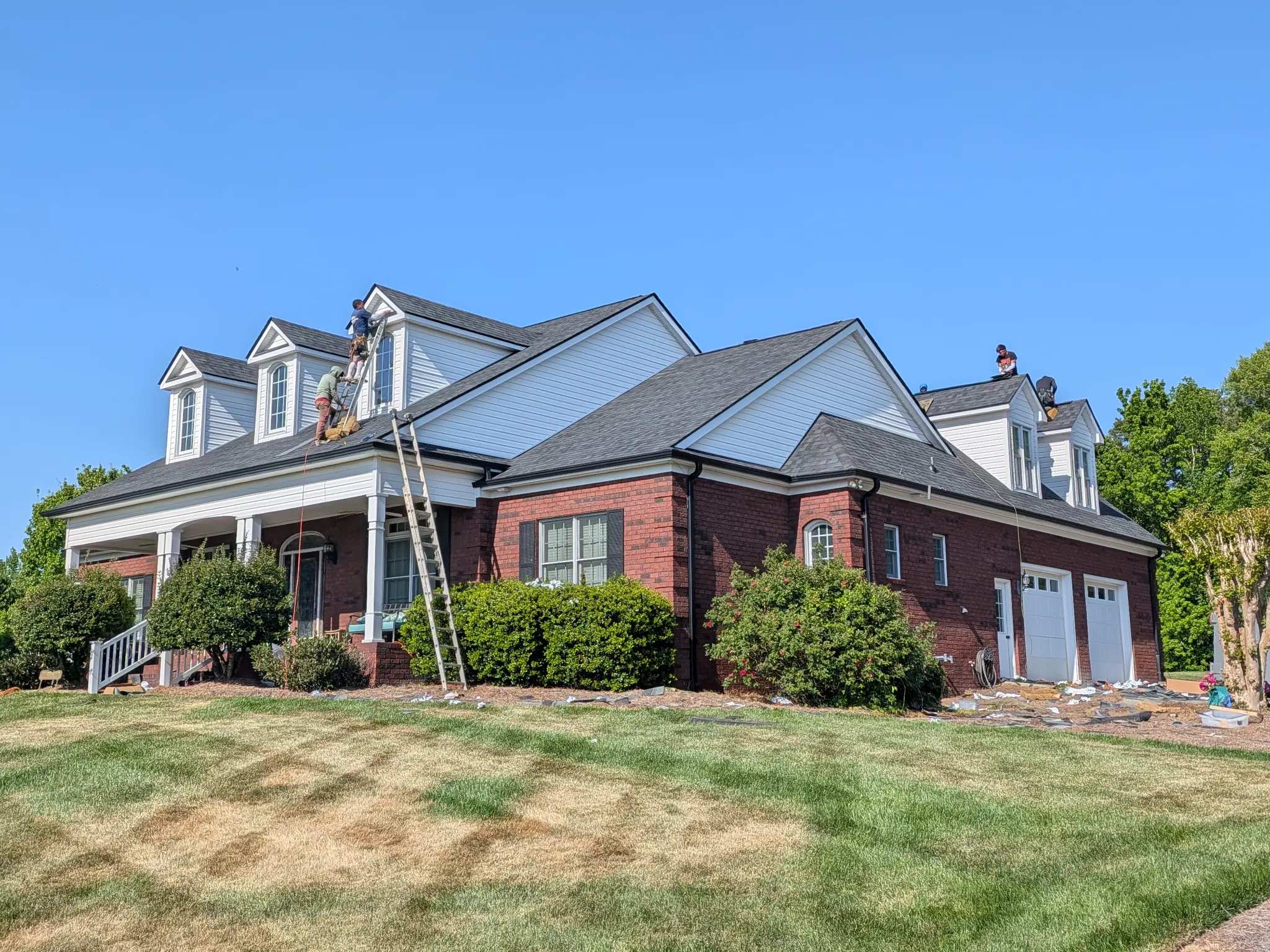
Spring in North Carolina is beautiful — dogwoods blooming, azaleas popping, and temperatures finally climbing back up. But spring also means one thing for your roof: storm season is right around the corner. Before the first severe thunderstorm rolls in off the coast or spins up from the Gulf, now is the time to take stock of what winter left behind.
At Happy Days Roofing & Construction, we inspect hundreds of NC roofs every spring. What we find consistently surprises homeowners — because most roof problems are invisible from the ground and completely silent until they're not. A small issue in April can become a $15,000 interior water damage claim by July. Here's exactly what we look for, what you can check yourself, and when it's time to call a professional.
Why Spring Is the Most Important Time to Inspect Your Roof
North Carolina winters are deceptively hard on roofing systems. Freeze-thaw cycles in the Piedmont and Triangle cause shingles to expand and contract repeatedly — loosening nails, cracking sealant strips, and opening up gaps around flashing. Coastal homeowners deal with salt air corrosion and the residual effects of any nor'easters or tropical systems that brushed through between November and March.
By the time spring arrives, your roof has already taken a beating — and now it's about to face NC's most active severe weather season. Hailstorms peak in the Carolinas between March and June. Tropical storm season officially begins June 1. Catching damage now, before another storm compounds it, is the difference between a minor repair and a full replacement claim.
The Spring Roof Inspection Checklist
Here's what a thorough spring inspection covers. Some of these you can observe from the ground or from inside your attic — others require a trained eye on the roof surface itself.
Shingle Condition
Look for curling, cupping, cracking, or missing shingles. Granule loss — visible as bare patches or heavy granule buildup in gutters — signals shingles nearing end of life.
Flashing Integrity
Flashing around chimneys, skylights, vents, and valleys is where most leaks start. Check for lifted, rusted, or separated flashing — especially after freeze-thaw cycles.
Nail Pops & Lifted Shingles
Wind events cause nails to back out and shingles to lift at the edges. Even a small lift creates an entry point for water and dramatically reduces wind resistance.
Gutters & Downspouts
Clogged gutters cause water to back up under the roof edge (ice damming in winter, overflow in summer). Clean them out and check for sagging or separated sections.
Attic Ventilation
Poor attic ventilation causes heat and moisture buildup that degrades shingles from the inside out. Check that ridge vents and soffit vents are clear and unobstructed.
Attic Moisture & Staining
Dark staining on attic sheathing or insulation indicates a slow leak that may not yet be visible inside the living space. Catch it now before mold sets in.
Pipe Boot Seals
The rubber boots around plumbing vent pipes crack and shrink over time — especially after UV exposure and temperature swings. A failed boot is one of the most common sources of attic leaks.
Ridge Cap Condition
Ridge cap shingles take the most wind exposure on the entire roof. Check for missing, cracked, or lifted ridge caps — they're often the first thing to fail in a wind event.
The Hidden Damage Most Homeowners Miss: Hail Bruising
Here's the thing about hail damage that catches NC homeowners off guard: you often can't see it from the ground. A hailstorm that leaves dents in your gutters and AC unit almost certainly left impact marks on your shingles — but those marks look like small dark spots or soft depressions that are invisible from 20 feet away.
What hail actually does is knock the protective granule layer off the shingle surface, exposing the asphalt mat underneath to UV rays. That exposed mat degrades rapidly — within 2–3 years, shingles that were hail-impacted will start cracking, curling, and failing. By then, your insurance claim window has long since closed.
This is exactly why we recommend a professional inspection after any hailstorm, even one that seems minor. Our team knows what hail bruising looks like, how to document it for an insurance claim, and how to distinguish storm damage from normal wear and tear. That distinction matters enormously when it comes time to file.
Starting Your Next Roof at 160 MPH
If your spring inspection reveals that it's time for a replacement, we install TAMKO Titan XT, StormFighter Flex, and HailGuard™ shingles — all rated to 160 MPH wind resistance straight from the factory. Most manufacturers max out at 110–130 MPH. As a TAMKO Platinum Pro certified contractor, we unlock the full manufacturer warranty on every installation, with no re-evaluation fees, no certification process, and no hidden costs. Just a hurricane-strength roof from day one.
Learn about our roof replacement process →When to DIY vs. When to Call a Pro
There are a few things homeowners can safely do themselves: clean gutters, clear debris from the roof surface with a soft broom, check attic insulation for moisture, and visually scan from the ground for obvious missing shingles. Everything else — walking the roof, inspecting flashing, probing for soft spots, or evaluating hail damage — should be left to a professional.
Walking an unfamiliar roof without proper equipment is genuinely dangerous, and an untrained eye will miss the subtle signs that matter most for an insurance claim. A professional inspection takes about 45 minutes, costs nothing with Happy Days (we offer free inspections), and gives you a documented baseline for your roof's condition before storm season begins.
What NC Homeowners Should Know by Region
Wilmington & Coastal NC
- Salt air accelerates flashing corrosion
- Hurricane prep starts now — not in August
- Check for wind-lifted ridge caps after any coastal storm
- Soffit and fascia rot from humidity
Charlotte & Piedmont
- Freeze-thaw cycles crack sealant strips
- Hail season peaks March–June
- Tree debris from spring storms clogs gutters fast
- Older neighborhoods have aging shingle systems
Raleigh & Triangle
- Large tree canopy = heavy debris and moss risk
- Ice storms cause significant sheathing damage
- Rapid growth = many homes with aging original roofs
- Hail corridor runs through Wake County
Don't Wait for a Leak to Tell You There's a Problem
The most expensive roof repairs are the ones that were preventable. A $400 flashing repair left unaddressed becomes a $4,000 sheathing replacement. A $600 pipe boot replacement ignored becomes a $12,000 mold remediation job. Spring is the best time to get ahead of all of it — before the summer heat bakes in any existing damage and before the next storm has a chance to make it worse.
We serve homeowners across all of North Carolina — Wilmington and the coast, Charlotte and the Piedmont, Raleigh and the Triangle. Our spring inspections are free, no-pressure, and come with a full written report so you know exactly what you're working with. If everything looks good, we'll tell you that too.